
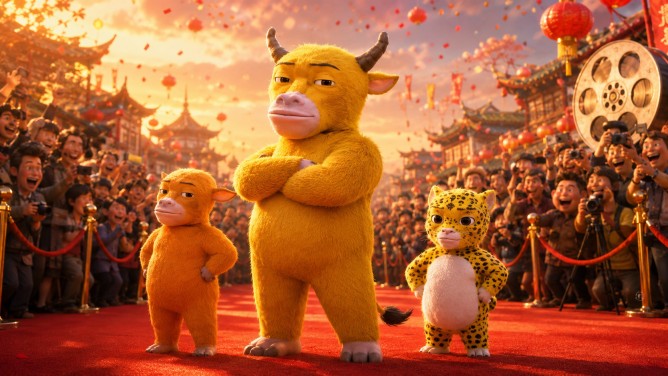
A seemingly modest animated film from China, “The Cow is Coming,” has defied expectations to become a box-office sensation despite its humble production values. The 86-minute feature, which centers on a newborn calf and a skylark navigating an abstract dreamscape, was released on August 5 with little to no promotional effort. Initially, it languished in obscurity, grossing merely around 7,700 yuan in its first ten days, with less than 300 tickets sold across the nation.
The film’s fortunes took a dramatic turn when social media users began to focus on its unconventional animation and storytelling, sparking widespread online discussion. This attention, albeit initially critical, transformed “The Cow is Coming” into a viral spectacle, intriguing audiences enough to fill cinema seats. As a result, the film’s earnings have soared to over 14.9 million yuan, making it one of the year’s most surprising successes.
Created over five years by just two individuals, Xin Yumeng and Sun Lifang, the film represents a stark departure from the polished productions typically associated with major Chinese animation, such as “Ne Zha 2.” The duo took on multiple roles, including writing, directing, voice acting, and production, to bring their vision to life. This grassroots approach contrasts sharply with industry trends leaning more towards artificial intelligence and large-scale production teams.
The film’s success has sparked a debate among viewers. Some appreciate its handcrafted quality, seeing it as a refreshing change from the increasingly AI-driven film industry. However, others question whether its popularity is a sign of audiences favoring novelty over quality, potentially sidelining more ambitious cinematic efforts.
Regardless of the mixed opinions, “The Cow is Coming” underscores the power of social media and curiosity-driven viewership in reshaping the trajectory of under-the-radar films. This case illustrates how a project with minimal initial visibility can capture the public’s imagination and become a significant box-office contender. As such, it stands as a testament to the unpredictable nature of film reception in the digital age.