
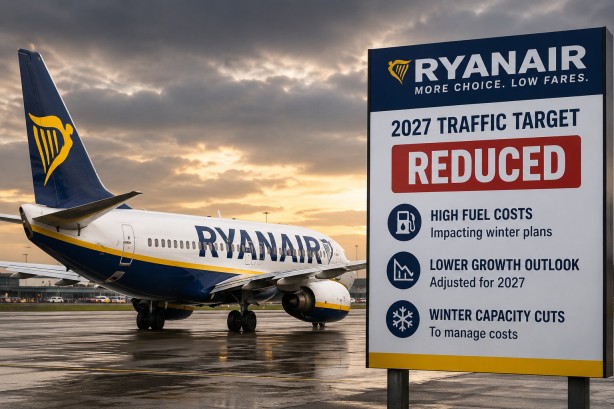
Ryanair has revised its passenger target for fiscal 2027 to 214 million, down from the previously projected 216 million, due to a strategic reduction in winter capacity aimed at minimizing the impact of high unhedged jet-fuel costs. The airline has noted that current jet fuel prices hover around $140 per barrel, and cautioned that if these elevated prices persist, European short-haul airfares could see a significant increase. During the typically sluggish winter season, Ryanair expects passenger traffic from November to March to remain relatively stable compared to the previous year, as it carefully manages its capacity.
To mitigate the effect of the high fuel prices, Ryanair has hedged approximately 80% of its fuel needs for fiscal 2027 through March of that year at an average cost of $67 per barrel. This hedging strategy offers a degree of protection against the current market prices. The airline anticipates that by reducing its winter capacity, it can decrease seasonal losses by between €70 million and €100 million. As part of this capacity management, Ryanair has already withdrawn five aircraft from its Charleroi base in Belgium and has cut around two million seats from its Brussels schedule for the winter of 2026 and summer 2027. The company warned that airlines with less robust fuel hedging might face increased financial strain if high oil prices continue.
Despite the challenges posed by the winter season, Ryanair remains optimistic about its summer traffic growth, which is expected to exceed 5%. In August, the airline experienced a 6% increase in passenger numbers year-on-year, reaching 22.2 million. The load factor remained strong at 96%. During the same month, Ryanair operated over 120,500 flights, although more than 400 were canceled due to eruptions from Mount Etna.
Looking ahead, Ryanair anticipates that its fiscal 2027 profit after tax will fall short of the record levels achieved in the previous financial year. However, the airline emphasized that it is still too early to provide detailed guidance on profits. Nevertheless, Ryanair’s strategic adjustments and robust hedging position it to weather the current economic challenges while preparing for future growth.