
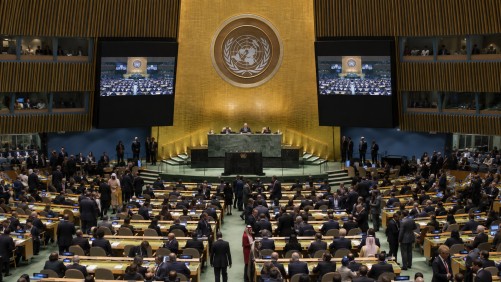
The United Nations General Assembly’s high-level debate in New York is set to focus on critical global issues, with significant implications for international peace and security. Leaders from nearly 130 countries are convening to address ongoing conflicts in the Middle East and Ukraine, advancements in artificial intelligence, and the mounting pressures facing the international system.
US President Donald Trump will play a pivotal role in the discussions, presenting his address to the assembly and engaging in bilateral meetings with key figures, including Ukrainian President Volodymyr Zelenskyy, British Prime Minister Andy Burnham, and Japanese Prime Minister Sanae Takaichi. This gathering comes as the world grapples with escalating tensions and the possibility of new diplomatic resolutions.
French President Emmanuel Macron has already initiated talks with President Trump regarding the conflict between Russia and Ukraine. Macron emphasized the need for a temporary cessation of attacks on Ukraine’s energy infrastructure and advocated for bolstering the country’s defensive capabilities, a topic he plans to discuss further with Zelenskyy during the week.
The ongoing conflict in Gaza and the pursuit of a two-state solution will also be at the forefront of the assembly’s discussions. Irish Prime Minister Micheál Martin is expected to take part in dialogues aimed at establishing a permanent ceasefire and advancing peace efforts in the region.
Iran, represented by Foreign Minister Abbas Araghchi, plans to use the UN platform to articulate its national interests and defend its rights. While US Secretary of State Marco Rubio expressed openness to engaging with the Iranian delegation, no formal meeting has been arranged. Rubio reiterated that preventing Iran from acquiring a nuclear weapon remains a primary goal for the United States.