
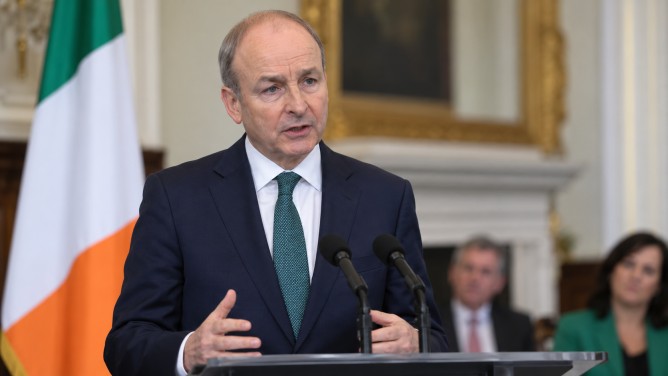
Despite significant divisions among member states, Irish Taoiseach Micheál Martin remains optimistic that the European Union can finalize an agreement on its next seven-year budget by the end of Ireland’s EU presidency. This assurance comes amid ongoing debates over spending levels and funding priorities, which have seen some countries pushing for deeper cuts while others defend allocations for regional development and the Common Agricultural Policy.
The Irish government has introduced a draft negotiating framework based on the European Commission’s initial €1.72 trillion proposal. However, this draft has faced criticism from several member states desiring more substantial reductions. The European Commission has also voiced concerns, suggesting that the draft could undermine financial flexibility and essential safeguards.
Martin acknowledged the complexities of aligning diverse national interests but emphasized that Ireland’s proposal aims to expedite negotiations rather than satisfy every state. European Council President António Costa, along with EU national leaders, will now engage in discussions to reach a consensus. Achieving an agreement by December is crucial to ensuring the budget is approved ahead of its implementation on January 1, 2028.
Beyond budget negotiations, EU leaders are set to address other pressing issues, including rising trade tensions with China, high energy prices, and the economic repercussions of the ongoing conflict involving the United States, Israel, and Iran. Trade relations with China are particularly pertinent, as the EU seeks to mitigate its expanding trade deficit, which reached €360 billion in 2025. The recent decision to limit Chinese hybrid car imports and proposals from France and Germany for stricter measures against certain imports will also be on the agenda.
The summit will tackle energy concerns, as tightening global oil and gas markets threaten to elevate household electricity costs during the winter months. EU leaders are expected to deliberate on short-term solutions alongside existing energy and emissions proposals.
Additionally, the EU will continue to support Ukraine amid escalating Russian attacks and uncertainties surrounding U.S. aid. Ukrainian President Volodymyr Zelenskyy is anticipated to meet with European leaders to discuss further political, financial, and military assistance for Kyiv.