
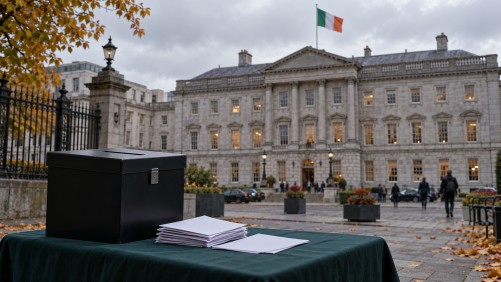
The upcoming Seanad bye-election in Ireland will have significant implications for the country’s legislative landscape, as it will fill a vacant seat on the Cultural and Educational Panel. This vacancy emerged following Seán Kyne’s return to the Dáil after his victory in the Galway West bye-election in May. His departure from the Seanad seat has prompted a new electoral process that could influence the balance of political power within Ireland’s Oireachtas.
Fine Gael has announced Ray McAdam, a former Dublin City Lord Mayor and city councillor, as its candidate for the vacant seat. McAdam, who previously participated in the Dublin Central Dáil bye-election, aims to secure his position in the Seanad through the votes of 234 eligible members of the Dáil and Seanad. These members will cast their ballots from 23 October until the voting closes on 6 November 2026.
The process of selecting a new member for the Seanad is distinct in that it will be decided internally by members of the Oireachtas, rather than through a public vote. This aspect of the election underscores the unique structure of Ireland’s legislative system, where specific panels like the Cultural and Educational Panel play a crucial role in representing various sectors of society.
As the nomination period draws to a close on 6 October, political parties are actively considering their participation in the election. Discussions among opposition parties are ongoing, as they weigh the potential benefits of fielding their own candidates against the backdrop of Fine Gael’s established presence in the contest.
The outcome of this bye-election will not only fill the current vacancy but could also have broader ramifications for the political dynamics within the Seanad and the overall legislative agenda. As the election date approaches, the focus remains on how the parties’ strategies will unfold and what impact the new appointee will have once in office.